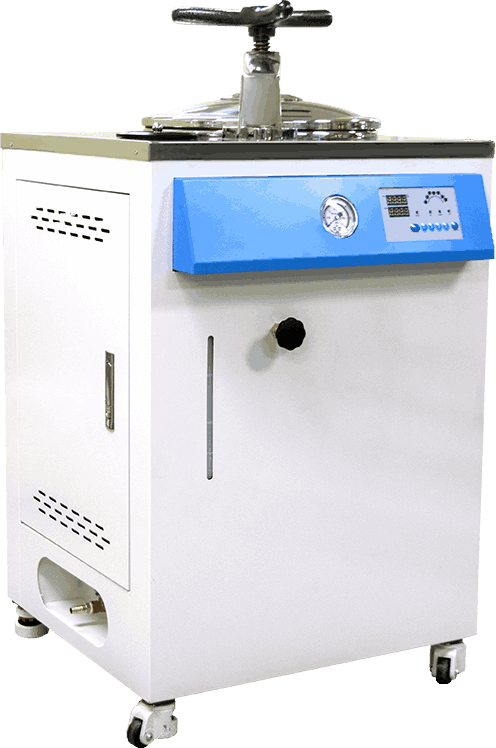
Imagine you’ve just pressed the start button on your autoclave and left to attend to other tasks. Just 30 minutes later, a strong burning smell fills the lab, signaling a severe water shortage in your autoclave.
A water shortage not only disrupts workflow but is also a death sentence for expensive heating elements and sensors. Many lab managers mistakenly believe simply filling the tank with water is sufficient, but the risks often stem from poor water quality and system leaks that we inadvertently overlook.
This article will provide you with a precise water level control procedure, how to identify technical faults, and optimal automation solutions. Together, we will protect equipment and improve operational safety starting from the smallest details.
.png)
1. Operating Mechanism and Water Level Warning System
1.1 Heating Element and Water Level Sensor Structure
In all steam sterilization devices, the heating element (resistance) plays a central role in generating high-pressure steam. For safe operation, this component must always be completely submerged in water for even heat dissipation.
The protection principle is based on sensitive electrode sensors. When the water level is sufficient, the water acts as a conductor, closing the safety signal circuit and allowing the machine to continue heating. Conversely, if the water level drops below the permissible level, the circuit will shut off to protect the system.
If the sensor fails or the water runs out, the heating element temperature can skyrocket to over 500°C in just a few minutes. This “dry heating” phenomenon causes metal deformation and can lead to fire and explosion in the sterilization chamber if not prevented in time.
.jpg)
The heating element (resistance) in an autoclave is the crucial component for generating steam
1.2 Common Water Level Error Codes
Understanding the machine’s language helps you handle situations more quickly. Each brand usually sets up unique warning codes to indicate when the water level is below the required level.
| Brand | Error Code Displayed | Meaning and Action |
| Hirayama | Er1 | Water shortage error; check water level and sensor |
| Sturdy | Low Water | Water level below safe; the machine automatically shuts off the heating. |
| JSR | Water Error | Warning: Water supply system or sensor is clogged. |
You should note that sometimes the sterilization chamber is still full of water but the machine still reports an error. This is usually because the sensor head is covered with a layer of dirt, preventing it from detecting the current in the water. To better understand how these parts work together, you should refer to the article on the structure of an autoclave sterilizer.
2. Water Supply Standards and the Risk of Calcium Scale Accumulation
2.1 Why Tap Water is the Enemy of Autoclaves
Using tap water for operation is the most common mistake causing the false low water level. Tap water contains a large amount of magnesium and calcium ions, which are the main agents causing limescale buildup inside the sterilization chamber.
This scale adheres tightly to the heating element, acting as an insulator, forcing the equipment to operate at a higher power than normal. According to technical reports, a scale layer as thick as 1mm can reduce thermal efficiency by up to 15%, wasting energy and reducing the machine’s lifespan.
More seriously, limescale buildup on the water level sensor creates an insulating film. As a result, the machine will report a false low water level error or, worse, fail to detect when the water is actually empty, leading to equipment failure.
2.2 Standard Water Standards for Sterilization
To maintain the durability of the equipment, choosing the right type of water supply is a prerequisite. You can refer to the comparison table of purity indicators below to apply to your lab:
| Criteria | Tap water | RO filtered water | Distilled water (1-2 times) |
| TDS level | > 100 ppm | < 10 ppm | ~ 0 ppm |
| Electrical conductivity | High (Causes scale buildup) | Low (Safe) | Very low (Optimal) |
| Recommended | Absolutely not | Can be used | Best |
We should prioritize using distilled water to ensure the sensor electrodes always function as sensitively as possible. Additionally, you should regularly clean the sensor head with 70% alcohol or a specialized descaling solution to remove accumulated impurities, ensuring the machine always operates stably.
3. Standard Water Checking Procedure Before Operation
3.1 5-Point Checklist Before Pressing Start
Forming a habit of checking before operation is the most effective way to avoid unfortunate risks. You should apply the following 5-step checklist for each steaming batch:
Water Level: Ensure the water level is higher than the heating element and at least 2-3cm from the bottom of the steaming basket.
Cleanliness: Check for turbidity, sediment, or burnt smell from the previous batch.
Rubber Gasket: Check for tightness, ensuring the gasket is not cracked or broken to prevent steam loss and rapid water depletion.
Drain Valve: Confirm that the bottom drain valve is completely closed.
Ducting: Ensure the exhaust duct is not clogged by sterilization materials.
Before proceeding, check the sterilizer’s operating principle to understand the water evaporation cycle occurring inside the chamber.
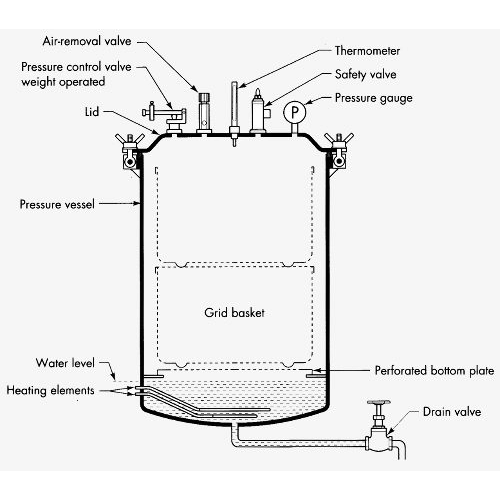
It is important to note that the internal components of the autoclave must be stable before use
3.2 Proper Water Filling Technique
Although it is a simple operation, incorrect water filling can damage sensitive control parts. You should use a funnel or long-nosed container to control the flow, avoiding water overflowing into the vents at the top of the sterilization chamber.
We also need to be careful not to overfill the water beyond the maximum allowed level. This can cause water to back up into the pressure pipe or wet the specimens to be sterilized inside the basket.
4. Emergency Handling When the Autoclave Runs Out of Water
4.1 3-Step Emergency Procedure
If you unfortunately find that the autoclave is running out of water, you need to remain calm and immediately follow these 3 safety steps:
Immediately disconnect the power: Turn off the power switch or unplug the power cord. Absolutely do not perform an emergency pressure release because the sudden pressure change when the chamber is overheating can be dangerous. Allow to cool naturally: Wait at least 60 minutes for the appliance to cool down gradually. Absolutely do not pour cold water into a hot steam chamber as this will cause thermal shock, cracking the chamber or exploding the heating element.
Inspect for damage: After the machine has cooled down, observe the condition of the heating element and try restarting it to see if the thermal fuse has blown.
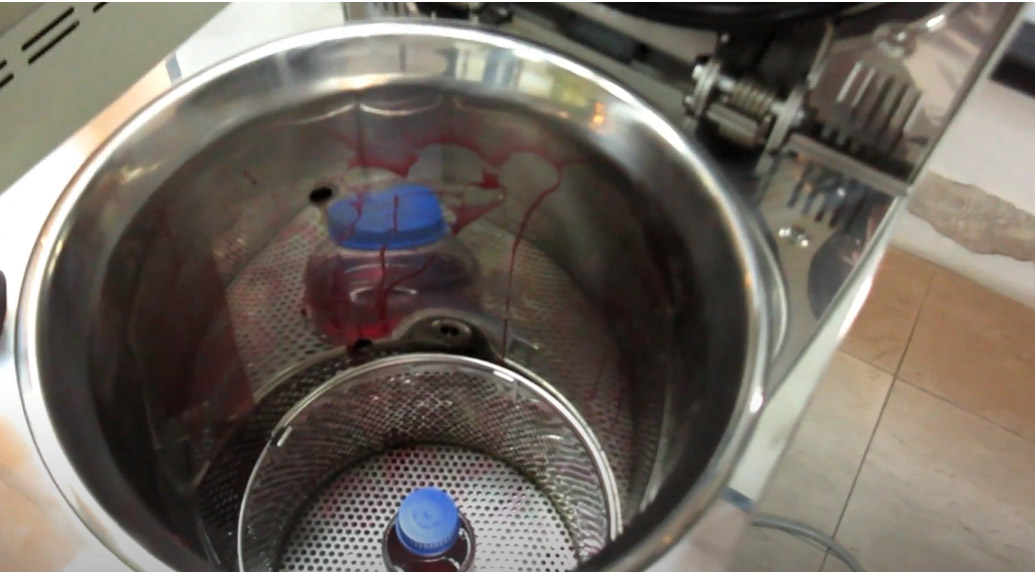
Careful handling is necessary when the autoclave runs out of water to ensure safety.
4.2 Signs of Serious Damage
The equipment cannot always be restored after a water shortage. You need to pay attention to the signs that indicate serious hardware damage to the autoclave:
A strong burning smell from burnt plastic or an extremely oxidized metal smell is the first sign. Visually inspect the heating element; if it is blackened, deformed, or cracked, do not continue using it.
In addition, if the circuit breaker (CB) in the lab trips continuously as soon as you turn on the machine, it is very likely that the heating element has short-circuited or is short-circuited. In this case, you need to contact a professional technician immediately to replace the genuine parts.
5. Automatic Water Level Control Technology Solution
5.1 Advantages of an Automatic Water-Filling Autoclave
In a busy work environment, human errors are unavoidable. Therefore, the current trend is to switch to using equipment with integrated auto-fill (automatic water supply) features.
This system automatically draws water from the reserve tank into the sterilization chamber based on signals from the water level sensor. An optimal choice for busy labs is the 103-liter SJ-FW100 Auto-Filled Sterilization Autoclave from South Korea with its intelligent water control system.
In particular, these models are often equipped with dual protection sensors. If the reserve tank runs out of water or the water supply system malfunctions, the machine will automatically shut off the power and issue a warning before the heating element is threatened by high temperatures.
5.2 Comparison of Semi-Automatic and Fully Automatic Autoclaves
Choosing the right type of machine largely depends on the budget and usage intensity of the unit. However, the comparison table below will help you clearly see the long-term benefits of automation:
| Criteria | Semi-automatic steamer | Fully automatic steamer |
| Water control | Manual (visual) control | Automatic (sensor-based) control |
| Heating element safety | High risk of forgetting to turn off the heater | Multi-layer protection (Auto-cut off) |
| Cost | Lower | Higher |
| Component durability | User-dependent | Very high |
We should consider investing in fully automatic systems if the sterilization intensity is high to minimize repair costs caused by water shortages. Refer to the 8 questions to answer before installing a steam autoclave to choose the right model. You can also learn more about advanced models from the manufacturer at SJ Clave Korea.
Conclusion
Running out of water in the autoclave during a cycle is a completely preventable risk if we adhere to strict operating procedures. The key lies in using high-quality distilled water and the habit of checking the checklist before each sterilization batch.
In particular, investing in modern models like the SJ-FW100 is the most sustainable solution to eliminate human error. This not only protects the unit’s assets but also ensures maximum safety for laboratory personnel.
If you are experiencing difficulties in maintenance or want to upgrade your sterilization system, please contact Duc Duong SCI immediately. Our team of experienced technicians is always ready to assist you 24/7.
DUC DUONG SCIENCE AND TECHNOLOGY COMPANY
Address: 1014/67 Tan Ky Tan Quy, Binh Hung Hoa, Binh Tan, HCM
Tel: (028) 3762 8042 – 3762 8043 – 3750 8514 – 3750 8793
Fax: 028 37628043
Email: ducduong@ducduongco.com
Website: ducduongco.com
ZALO OA: DUC DUONG SCI
FAQ (Frequently Asked Questions)
Why does the water level sensor still show empty even though I have filled the water to the correct mark?
Your water level sensor may have heavy limescale buildup or oxidation, leading to poor conductivity. Clean the sensor head with alcohol or fine sandpaper to restore its detection capability.
Can bottled water (such as Lavie/Vinh Hao) be used in the autoclave?
No. Bottled mineral water contains many mineral ions that will cause scale buildup faster than tap water. Only use distilled water or RO purified water with a TDS level below 10 ppm.
Can a burnt-out heating element in the autoclave due to lack of water be repaired?
It can be repaired by replacing the heating element, but the cost is quite high. You need a technician to check the control system and the autoclave chamber for deformation due to overheating before replacing the component.
How often should the autoclave chamber be cleaned to prevent water system blockage?
It is best to drain excess water and clean the autoclave chamber every day after the end of each shift. This helps remove accumulated impurities that can damage the sensor.
Does the SJ-FW100 autoclave require someone to monitor the water level?
No, the SJ-FW100 self-filling steamer has an automatic sensor that draws water from an external reservoir. When the water in the reservoir runs out, the machine will issue a safety warning, giving the operator complete peace of mind.
Hình ảnh đính kèm