
Did you know that even a small variation in temperature and humidity uniformity inside a climate chamber can cause the equipment to be flagged with a severe NC (Non-Performing Null) error by auditors? The most common cause is the lack of raw data monitoring records and evidence of independent testing to verify the chamber’s operational capability. This directly undermines the reliability of sample storage conditions according to ISO 17025 standards.
To ensure accurate equipment operation, we need to utilize modern laboratory equipment to maintain the unit’s competitiveness. However, many technicians remain uncertain about whether their temperature and humidity test chambers truly comply with the stringent requirements of the standard. This article will provide a checklist for reviewing standardized climate chambers, helping your equipment pass any quality audit.
1. What does ISO 17025 standard specify regarding sample storage equipment?
1.1. Resource requirements in section six.4
National standards clearly specify the management capabilities of laboratory equipment. Specifically, in Section 6.4 (Equipment) of the legal document TCVN ISO/IEC 17025:2017, issued by the General Department of Standards, Metrology and Quality, equipment must meet the necessary accuracy. We are required to conduct operational capability verification before putting the machine into official use.
For microclimate chambers, this verification means proving that the environmental control system is functioning properly. You need to provide raw data evidence showing that the humidifier chamber maintains a stable artificial climate range. Otherwise, without documentation, our test data will be completely invalid.
1.2. Controlling Records and Common NC Errors
In addition, Section 7.5 (Technical Records) of the standard stipulates that laboratories must maintain a complete operational history. VILAS assessors will rigorously compare the machine operation logs with actual test results. Through practical surveys in Vietnamese laboratories, many units often experience serious NC errors due to missing environmental data.
To overcome this risk, we need to proactively review the following common non-conformities:
Logbooks are left blank or contain inaccurate retrospective entries.
Auxiliary hygrometers mounted inside the chamber lack periodic calibration labels.
There is no procedure or response plan for out-of-sight (OOS) incidents.
2. Criteria for Checking Temperature and Humidity Distribution
2.1. Nine-Point Temperature and Humidity Mapping Method
To comprehensively assess the interior workspace, we need to apply the 9-point mapping method. This technique requires placing standard sensors at 4 corner points of the upper layer, 4 corner points of the lower layer, and 1 point at the center of the chamber. According to the technical document of the International Electrotechnical Commission (IEC) 60068-3-6, the permissible error range must be extremely strict.
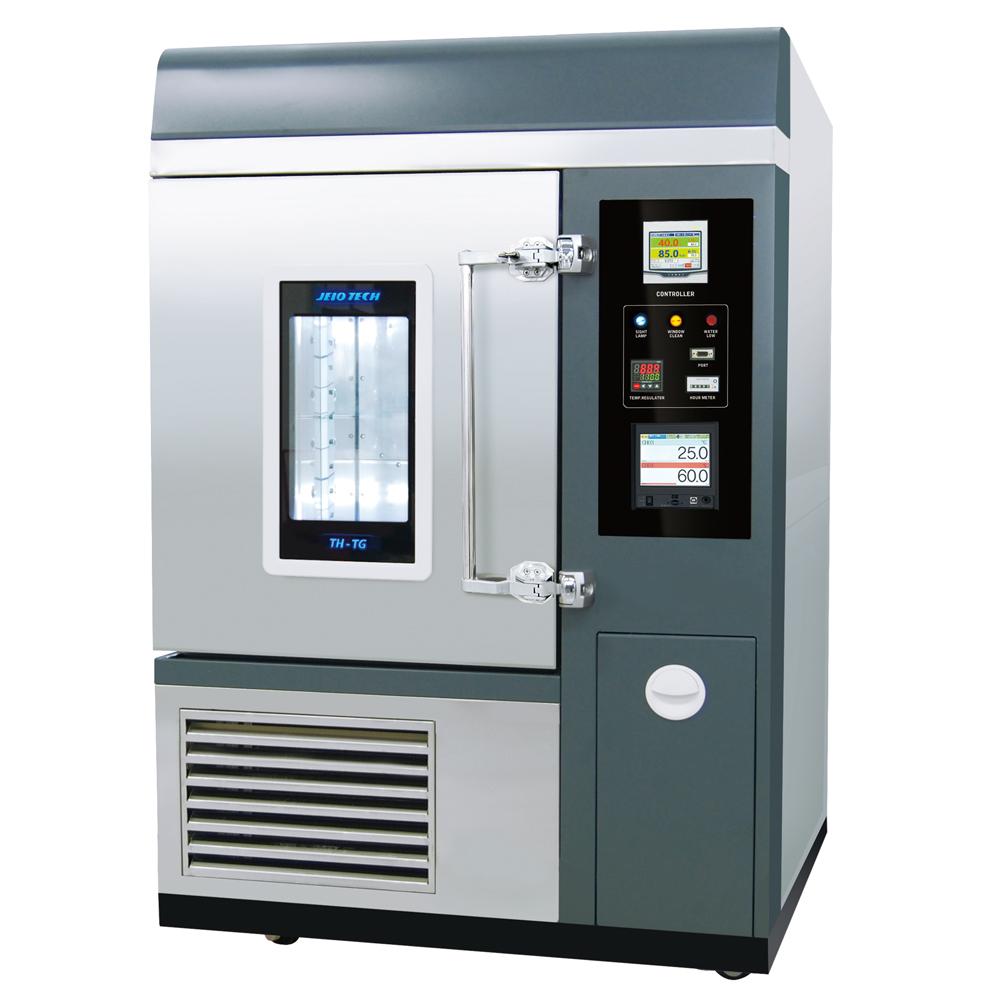
Specifically, temperature uniformity must be ≤±0.5 °C, humidity ≤±3%RH. At the same time, temperature fluctuation must not exceed ≤±0.1 °C and humidity ≤±2%RH. Currently, the TH-TG-1000 temperature and humidity test chamber from Jeiotech, South Korea, perfectly meets these ideal parameters thanks to its circulating air convection mechanism.
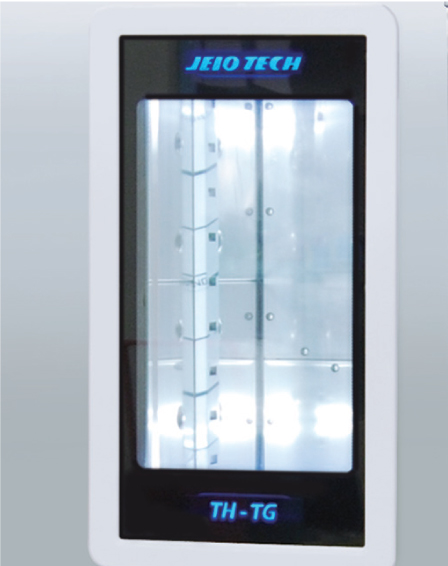
The microclimate chamber must meet the temperature and humidity conditions in accordance with TCVN-ISO-IEC 17025
2.2. Assessing Temperature and Humidity Recovery Time
Another important technical criterion in the evaluation checklist is the recovery time. This is the time it takes for the system to automatically compensate for the lost temperature and humidity after opening the operating door. Typically, the inspection standard stipulates that the door opening time should not exceed 30 seconds.
If the cabinet’s hardware is of poor quality, a prolonged recovery time will cause thermal shock to the sample. This sudden fluctuation directly damages the microbial culture or destroys its physicochemical structure. Therefore, we need to include this inspection item in the laboratory’s periodic review process.
3. Calibration Procedure and Measurement Standard Linkage
3.1. Calibration Point and Measurement Cycle
The legality of the monitoring instrument is a prerequisite for confirming the reliability of the measurement. We need to comply with the mandatory periodic calibration cycle of at least 12 months as stipulated by Vietnamese measurement regulations. This activity must be performed by a competent unit accredited under ISO 17025.
The tester should select practical calibration points based on the laboratory’s daily usage range. For example, for aging testing, common benchmarks are 25°C/60%RH or 40°C/75%RH. Strict adherence to the standard measurement chain ensures complete peace of mind when receiving inspection teams.
3.2. Reference Calibration Service Cost Table
To assist purchasing staff in budgeting, we need to refer to publicly available service prices. This cost usually varies depending on the chamber capacity and the number of measurement points required. Below is a reference price table collected from the Quality Measurement and Standardization Technical Center 3 (Quatest 3):
| Chamber Capacity | Estimated Calibration Cost (VND) | Suggested Calibration Provider |
| Under 200 Liters | 2,500,000 – 3,500,000 | Regional Measurement Center |
| 500 – 1000 Liters (such as TH-TG-1000) | 4,500,000 – 6,000,000 | Quatest 1 / Quatest 3 |
When receiving the calibration certificate, you must carefully read the correction value. Technicians need to use this data to set the offset on the controller, helping to eliminate system errors.
4. Applications of microclimate chambers by industry
4.1. Drug stability testing in zone IVb
In the pharmaceutical industry, the control of environmental conditions for sample storage is extremely strict. Technical guidelines from the Vietnam Drug Administration require strict adherence to international regulations. Therefore, we must understand the ICH Q1A (R2) standard for microclimate chambers in climate zone IVb.
This stringent standard requires the long-term sample storage chamber to be continuously maintained at 30°C ± 2°C and relative humidity of 75%RH ± 5%RH. If the equipment malfunctions for more than 24 consecutive hours, all research data will be discarded. This causes significant losses in terms of both cost and time for businesses.
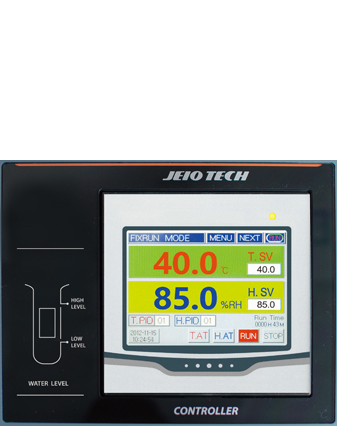
Temperature and humidity standards must be continuously maintained inside the microclimate chamber
4.2. Applications in Microbiology and Accelerated Aging
Besides the pharmaceutical industry, many other testing fields also heavily rely on the physical stability of the chamber. Each analytical process requires a specific optimal parameter setting scenario. We can highlight some core applications of the equipment in the lab:
Microbiological culture: Maintaining a stable temperature of 37°C and high humidity to prevent drying of Petri dishes.
Accelerated aging: Testing the durability of plastic packaging and polymer films under continuous thermal and humid conditions.
Component testing: Evaluating the resistance to short circuits and electrostatic corrosion of electronic materials.
5. Checklist of Quality Microclimate Chamber Hardware
5.1. Chamber Material and PID Control System
When building a checklist for purchasing or reviewing equipment, the mechanical structure criteria should be prioritized. The interior chamber of the microclimate chamber must be made entirely of high-quality stainless steel, such as SUS304. This premium material prevents corrosion and rusting when operating in a continuously saturated humid environment.
The control system must also integrate an independent dual-modulation PID algorithm for both temperature and humidity. This intelligent mechanism completely eliminates overshoot of the set parameters. The superior design of the high-end Jeiotech TH-TG-1000 chamber, imported from South Korea, is a prime example that helps your lab achieve maximum performance.
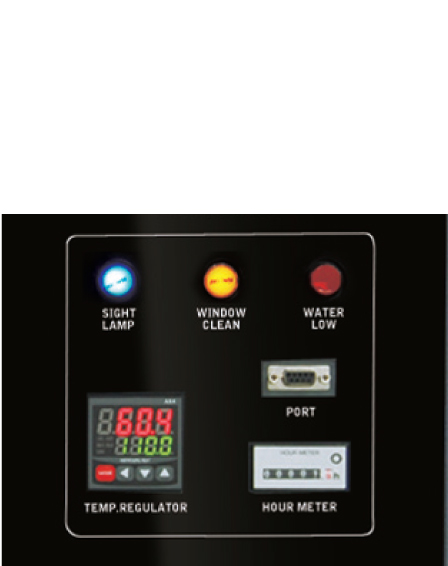
Modern climate chambers have integrated high-quality PID control
5.2. Evaporative Humidification System and Safety Barrier
To protect test samples, the humidifier’s steam generation mechanism needs to employ natural evaporation membrane technology. This method prevents direct spraying of mist that causes condensation on the sample surface. In addition, we must integrate hardware safety features into the checklist:
Independent dual overheat protection devices to ensure laboratory fire safety.
Automatic circuit breaker (ELCB) to prevent voltage leakage to the casing during operation.
Automatic low water level sensor to automatically cut off the heating element to prevent fire.
6. Software Control Data Integrity Criteria
6.1. Audit Trail Feature
In the digital age, data integrity has become a mandatory criterion when evaluating modern laboratories. Strict guidance from FDA 21 CFR Part 11 stipulates that all changes to settings must be automatically recorded. We are not allowed to use software systems that allow arbitrary deletion or modification of raw data.
To thoroughly address this issue, you should learn how LC DataKeeper increases data reliability on the microclimate chamber to securely synchronize data. The system supports automatic report generation in tamper-proof PDF/CSV format via USB port, perfectly meeting ISO 17025 standards.
6.2. Secure User Account Access Control
The intelligent management system of the device must support access control with at least 3 levels of independent secure accounts. This hierarchical control helps to minimize human errors. We need to configure access control in the Lab according to the following roles:
Administrator (QA/Lab Manager): Full authority to configure the system, approve reports, and set security ranges.
Supervisor (Chief Technician): Installs test programs, manages operation, and checks for equipment errors.
Operator (Tester): Runs the pre-programmed software, monitors the measured parameters, and records the raw results.

Different access rights need to be assigned to each person when controlling the microclimate chamber in the lab
7. Procedure for Handling Climate Chamber Errors
7.1. Action Scenario for Correcting Non-Conforming Work
When the alarm system signals a parameter exceeding the threshold, the technician must immediately activate the emergency scenario. It is mandatory to apply Clause 7.10 (Non-Conforming Work) in accordance with the spirit of ISO 17025. The incident isolation procedure is implemented quickly in the following steps:
Temporarily stop the test related to the malfunctioning climate chamber and post a warning sign indicating the equipment status.
Safely move sensitive test samples to a backup chamber to protect their mechanical properties.
Record the raw environmental incident and report it to the QA department for data risk assessment.
7.2. Technical Solution for Handling Condensation on the Chamber Window
Condensation on the humid chamber window is usually due to a large temperature difference with the outside environment of the lab. This error obstructs visibility, forcing technicians to open the door for inspection, resulting in heat loss. To completely resolve this, we should prioritize equipment from the manufacturer Jeiotech.
The company has integrated advanced heated glass door technology into its high-end product lines. This intelligent hardware solution ensures the glass door remains clear, allowing for continuous and safe observation of the sample’s condition.
Conclusion
Establishing a checklist for evaluating sample storage equipment that adheres to international quality standards is crucial. This not only helps our laboratory successfully pass VILAS accreditation but also protects the integrity of research data. Owning a high-quality test chamber like the Jeiotech TH-TG-1000 model from South Korea is the most secure long-term investment. Contact Duc Duong Company today to receive the best price quote!
DUC DUONG SCIENCE AND TECHNOLOGY COMPANY
Address: 1014/67 Tan Ky Tan Quy, Binh Hung Hoa Ward, Binh Tan District, Ho Chi Minh City
Tel: (028) 3762 8042 – 3762 8043 – 3750 8514 – 3750 8793
Fax: 028 37628043
Email: ducduong@ducduongco.com
Website: ducduongco.com
ZALO OA: DUC DUONG SCI
FAQ (Frequently Asked Questions)
1. How long is the storage time for temperature and humidity log data of a microclimate chamber according to ISO 17025?
The standard stipulates that technical records must be securely stored for the entire specified period of the laboratory or the product’s lifecycle (usually a minimum of 3 to 5 years). This ensures the traceability of raw data during unscheduled quality inspections.
2. Is it possible to self-calibrate a microclimate chamber using a handheld hygrometer?
You absolutely cannot self-calibrate and obtain a legal certificate if the laboratory has not been granted a competency code in the field of temperature and humidity calibration. However, we can use a standard hygrometer that has been externally calibrated to conduct internal verification checks periodically every month.
3. Does the Jeiotech TH-TG-1000 test chamber support LAN network connectivity for remote monitoring?
Yes, Jeiotech’s high-end TH-TG-1000 product line has a built-in smart LAN connection port. This feature allows laboratory management to easily monitor real-time charts and receive remote environmental incident alerts via a central computer.
4. If the temperature and humidity sample chamber experiences a sudden power outage for 10 minutes, will the test results be invalidated?
Normally, 10 minutes is a short period, and the well-insulated chamber structure maintains a relatively stable environment. However, you need to extract raw log data at that time and create a small deviation assessment to demonstrate that the deviation does not affect sample quality.
5. Why does the microclimate chamber have a humidity setting of 75 percent, but the independent hygrometer inside shows 68 percent?
This occurs because the chamber’s sensor probes become inaccurate after prolonged continuous operation and need to be recalibrated for the system offset value. Another reason is that the evaporative humidifier is clogged with limescale, reducing its steam generation efficiency; you need to clean the water chamber.