
Did you know that over 40% of new drug registration applications encounter problems due to substandard stability data? Operating a climate chamber that doesn’t meet stringent international guidelines will render all sample storage efforts useless. This directly leads to serious NC errors during GMP post-audits.
This article will clarify the core regulations in ICH Q1A R2 for environmental control equipment. We will delve into the practical technical requirements, from hardware to management software. Through this, you can confidently optimize your testing records.
1. Nature and Climate Zoning of ICH
1.1. Core Concept of ICH Q1A R2
The ICH Q1A R2 standard specifies very stringent procedures for testing the stability of pharmaceutical substances and new drug products. The core purpose of this guideline is to accurately determine the shelf life and recommended storage conditions on the label. To achieve reliable data, we are required to maintain samples continuously in a standardized test chamber.
The quality management system requires a minimum data tracking period of 12 months for long-term tests. If our equipment experiences a malfunction or interruption, the data chain will immediately invalidate the legal validity of the registration dossier. Therefore, understanding the nature of the standard helps you develop the safest equipment operation plan.
1.2. Actual Climate Zoning in Vietnam
The ICH International Conference divided the world map into different climate zones based on average annual temperature and water vapor pressure. Currently, Vietnam is entirely within Zone IVB (Hot/Humid climate) with the strictest criteria. Therefore, establishing the default environment for the microclimate chamber in the lab must closely adhere to this geographical characteristic.
Not only do microbiology laboratories need to pay attention to sterilization equipment such as the top 3 100-liter autoclaves from Korea, but physico-chemical laboratories also need to strictly control climate zoning. We need to choose equipment with an evenly distributed humidification range to avoid localized condensation.
2. Temperature and Humidity Standards and Permissible Errors
2.1. Stability Testing Conditions
Based on the IVB climate zoning guidelines, the drug stability testing procedure is divided into three distinct operating modes. We need to establish precise temperature and relative humidity benchmarks for each product line. The table below summarizes the required technical specifications:
| Test Mode | Standard Temperature | Relative Humidity (RH) | Minimum Duration |
| Long-term | 30°C ± 2°C | 75% ± 5% | 12 months |
| Accelerated | 40°C ± 2°C | 75% ± 5% | 6 months |
| Intermediate | 30°C ± 2°C | 65% ± 5% | 6 months |
Maintaining this temperature and humidity range continuously for months poses a significant challenge to the equipment’s electromechanical system. Even a small deviation in the control cycle can completely alter the degradation kinetics of the pharmaceutical substance.
2.2. Controlling Temperature and Humidity Phase Deviation
Unintended temperature and humidity phase deviations are a major risk in the laboratory. International guidelines stipulate extremely strict allowable equipment error limits of ±2°C and ±5%RH. Any fluctuations exceeding this limit lasting more than 24 hours must be documented and processed.
In the event of a power outage or humidification system failure, a pre-approved emergency response procedure is necessary. Detailed recording of phase deviation times will help the QA department reassess the impact on the samples. Therefore, possessing equipment with high mechanical stability is the best safeguard for data protection.

Controlling the temperature and humidity phase difference according to ICH Q1A R2 is extremely important
3. Equipment Control According to ISO 17025
3.1. Compliance with Sections 6.4 and 6.5 of ISO 17025
According to Section 6.4 (Equipment) in the TCVN ISO/IEC 17025:2017 standard, all instruments affecting test results must be strictly controlled. A periodic calibration program is mandatory to determine the actual error of the sensor system. We cannot use uncalibrated equipment to run commercial drug samples.
At the same time, Section 6.5 emphasizes that the measurement standard must be traceable to the International System of Units (SI) through an unbroken chain. Maintaining complete calibration certificates helps you demonstrate your lab’s competence to regulatory authorities. This responsibility is similar to knowing how to properly manage the autoclave logbook according to ISO 17025.
3.2. Thermal & Humidity Mapping Method
Thermal & Humidity Mapping is key to evaluating the three-dimensional space inside a climate chamber. This test must be conducted in both states: empty and fully loaded with samples. This process helps identify airflow “dead zones,” where the risk of temperature and humidity deviations is highest.
Typically, technicians will position 9 to 15 independent sensors at the corners and center of the chamber. Continuous data collection over 24 hours will demonstrate the geometric uniformity of the equipment. A successful mapping result is the most convincing evidence in any validation process.
4. Data Integrity
4.1. ALCOA+ Principles and Electronic Logging Feature
Data integrity, according to the WHO’s ALCOA+ principles, is the highest standard when evaluating management software. For long-term sample run climate chambers, all raw temperature and humidity data must be continuously stored. The system must integrate an Audit Trail (Electronic Log) feature to automatically record all configuration operations.
Any changes to settings or disabling of alarms by technicians cannot be deleted or modified. You can refer to the guide on how LC DataKeeper increases data reliability on climate chambers to better understand this automation software solution. Good raw data security will help the laboratory completely eliminate the risk of interference with results.
4.2. User Access Control on the Control System
A smart control system must have a hierarchical account security function for laboratory personnel. We usually set up three basic levels including: Operator (Operating Technician), Supervisor (Laboratory Manager), and Admin (QA Representative/Maintenance Engineer). This access control prevents arbitrary changes to cycle parameters.
The use of anonymous login accounts is a serious NC error during expert inspections. Each individual accessing the equipment must log in with a unique ID and password. This ensures that all interactions with the system are clearly identified, increasing transparency in the records.
5. Hardware Configuration Meeting ICH Requirements
5.1. Humidification Technology and Air Circulation System
For continuous 24/7 operation over many years, the hardware configuration of the equipment plays a crucial role. Steam humidifier technology consistently proves superior to ultrasonic nozzles. The steam system creates a much more stable saturation humidity range when the cabinet maintains a temperature of 75% RH.
In addition, forced air convection is mandatory to evenly distribute heat flow. The fan must be designed with optimal aerodynamics to blow air evenly across all sample tray levels. This combination completely eliminates the difference in parameters between the top and bottom points of the cabinet.
5.2. Safety Warning System and Water Supply Requirements
A dual safety protection system is an indispensable criterion to prevent fire and explosion risks during long-term sample storage. Standard equipment should be equipped with a software-based overheat warning feature combined with an independent mechanical circuit breaker. When the temperature exceeds the safe limit, the system will automatically cut off the heating power immediately.
In addition, the quality of the water supplied to the humidifier directly affects the lifespan of the sensor system. We must use distilled water or RO purified water with a conductivity of < 1.0 µS/cm. Clean water helps prevent calcium scale buildup and rust, ensuring the accuracy of the humidity probe.
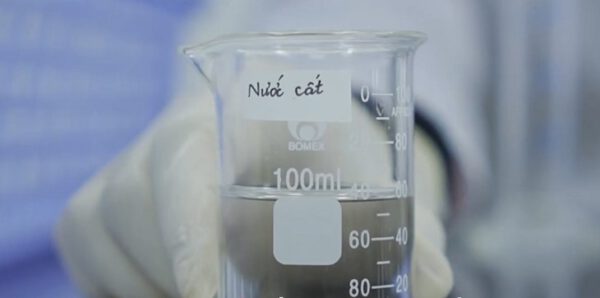
Distilled water must be used for the humidifier as per ICH Q1A R2 regulations
6. Review of the TH-TG-1000 Microclimate Chamber
A High-End Technical Solution from Jeiotech, South Korea
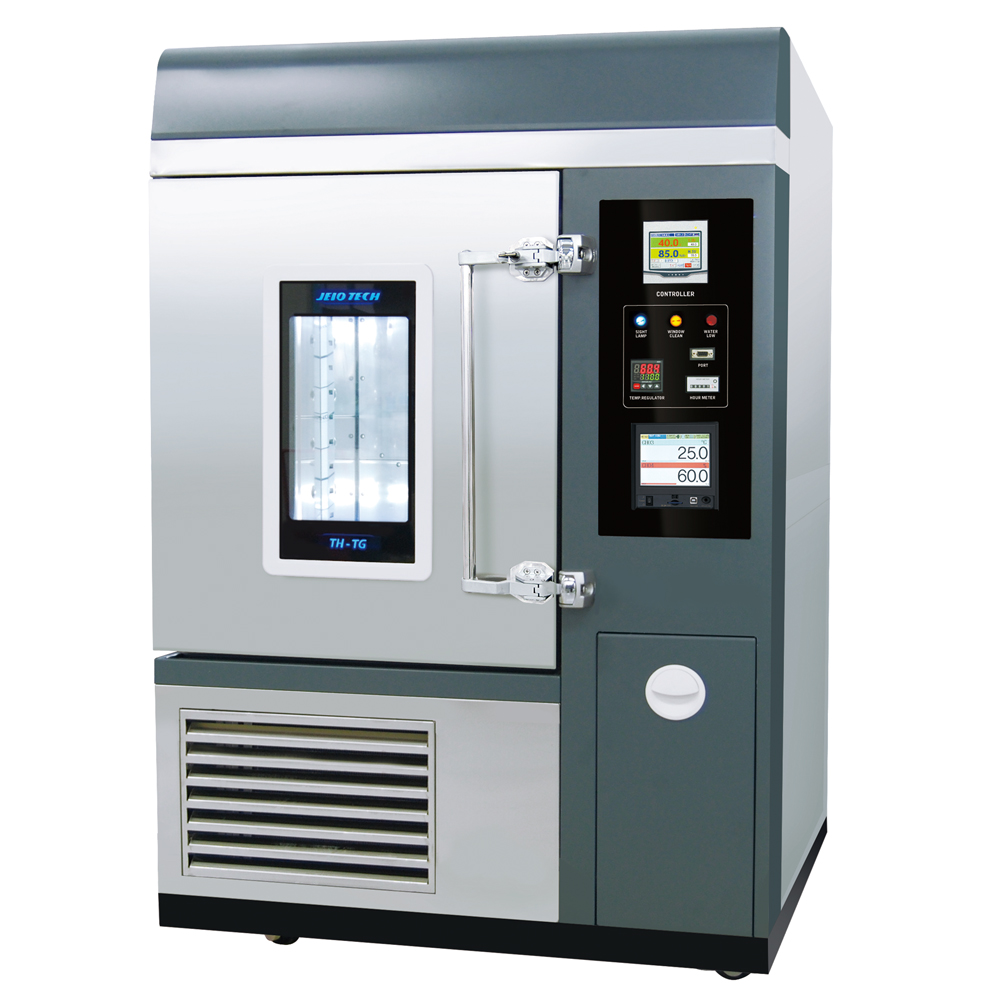
Jeiotech, a South Korean company, is a globally renowned brand in the field of environmental testing chamber manufacturing. Their high-end TH-TG-1000 temperature and humidity test chamber (microclimate chamber) is specifically designed to meet the most stringent ICH standards. Its extremely large 1000-liter chamber volume optimizes sample storage space for large-scale pharmaceutical factories.
The system features an advanced Smart-Lab controller, supporting secure data export via a computer connection. The monolithic stainless steel casing provides superior mechanical durability over time. This is a long-term investment solution that gives laboratories complete peace of mind regarding data integrity.
Conclusion
Complying with ICH Q1A R2 guidelines is not simply about completing the legal documentation when registering a drug. It is the core foundation for protecting product quality and the reputation of the entire business. By effectively controlling measurement errors and data integrity, we are building a sustainable quality system. If you are looking for a standard environmental control equipment solution, contact Duc Duong immediately for advice on genuine Jeiotech products.
DUC DUONG SCIENCE AND TECHNOLOGY COMPANY
Address: 1014/67 Tan Ky Tan Quy, Binh Hung Hoa Ward, Binh Tan District, Ho Chi Minh City
Tel: (028) 3762 8042 – 3762 8043 – 3750 8514 – 3750 8793
Fax: 028 37628043
Email: ducduong@ducduongco.com
Website: ducduongco.com
ZALO OA: DUC DUONG SCI
FAQ
1. Why is the ICH Q1A R2 standard extremely important in the pharmaceutical industry?
Because it is a mandatory international standard to demonstrate the stability of pharmaceutical substances, ensuring that drugs maintain their content and do not produce toxicity before their expiration date.
2. Can the Jeiotech TH-TG-1000 microclimate chamber run both long-term and accelerated testing simultaneously?
Absolutely not. Because each test mode requires a different temperature (30°C and 40°C), you must operate on independent chambers.
3. What is the ISO 17025 temperature and humidity mapping cycle for the climate chamber?
The mapping process, combined with recalibration of the sensor system, should be performed every 12 months, or immediately after major repairs to the chamber.
4. Is LC DataKeeper software mandatory to install with the climate chamber?
This is a highly recommended technological solution to help laboratories automate data storage and prevent the risk of losing original data.
5. Can the water supply for the Jeiotech chamber’s humidification system be taken from tap water?
No. Tap water contains many minerals that will cause scale buildup on the heating element and seriously distort the humidity sensor’s display results.