
An ISO 17025 audit can be disastrous if the expert requests access to sterilization data from six months prior but your records are blank. In reality, many technicians still underestimate the importance of logbook keeping, viewing it merely as a formality.
This oversight often leads to serious NC (non-conformance) errors regarding data integrity in the lab. This article will guide you on how to set up and manage a standard autoclave logbook according to TCVN ISO/IEC 17025:2017. This will ensure your unit maintains its technical competence and is ready for any rigorous audit.
1. The Role of Logbooks in the ISO 17025 Management System
In a quality management system, traceability plays a crucial role as the backbone of all test results. The equipment logbook is the direct link that demonstrates that sterilization conditions have been consistently and objectively controlled.
According to Clause 7.5 (Technical Documentation) of the ISO 17025 standard, laboratories must maintain records to enable repeatability of testing activities. Without a logbook, we would lose evidence that the sterilization temperature has reached a safe threshold for the sample. Complete documentation ensures that all final analytical results are valid and legally binding.
2. Structure of a Standard ISO 17025 Autoclave Logbook
To meet control requirements, a standard logbook template needs to be scientifically designed and include all important data fields. We need to accurately record parameters such as the cycle ID, operating time, and equipment status before running.
In particular, understanding how to accurately control pressure in the autoclave will help you record these technical parameters in more detail. Below is a list of the minimum data required in the technical documentation:
| No. | Information Field | Control Significance |
| 1 | Date & Operator | Identify personnel responsibility |
| 2 | Equipment ID | Equipment traceability |
| 3 | Pressure & Temperature | Prove sterilization effectiveness |
| 4 | Indicator result | Verify usability |

Implementing a Logbook management system according to ISO 17025 ensures that autoclave equipment has strong legal compliance
3. Data Recording and Control Procedures in the Lab
ALCOA Principles in Record Keeping
Data integrity is a prerequisite when managing records according to international standards. We should apply the ALCOA principle: data must be direct, readable, timely, original, and accurate. When recording, technicians need to complete the information at the time of operation to avoid confusion or data discrepancies.
In addition, the error correction process must strictly adhere to the SJ Clan’s guidelines. You absolutely must not use correction fluid to cover up errors in the operation log. Instead, draw a line through it, write the correct content next to it, and sign to confirm according to the lab’s regulations.
4. Control of Consumables and Equipment Calibration
4.1. Confirmation of Usability through Sterilization Indicators
Logbook recording is only truly complete when accompanied by the results of internal quality control of consumables. Using indicator tape or bioindicator tubes helps us confirm the usability of each autoclave cycle.
Attach the chemical indicator results directly to the corresponding logbook page.
The IQ OQ PQ validation record for the laboratory autoclave should be linked to the batch number in the operating log.
Always compare and note the date of the most recent equipment calibration to ensure the error is within acceptable limits.
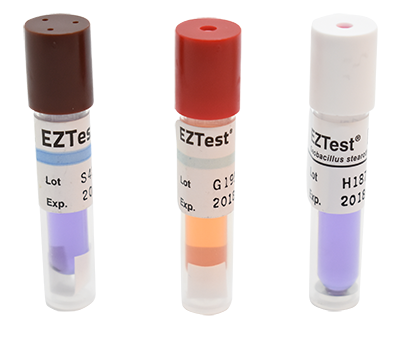
Use of bioindicator tubes in the application of the ISO 17025 logbook for autoclaves
5. Application of Automation Technology in Logbook Management
Advantages of New Generation Autoclaves
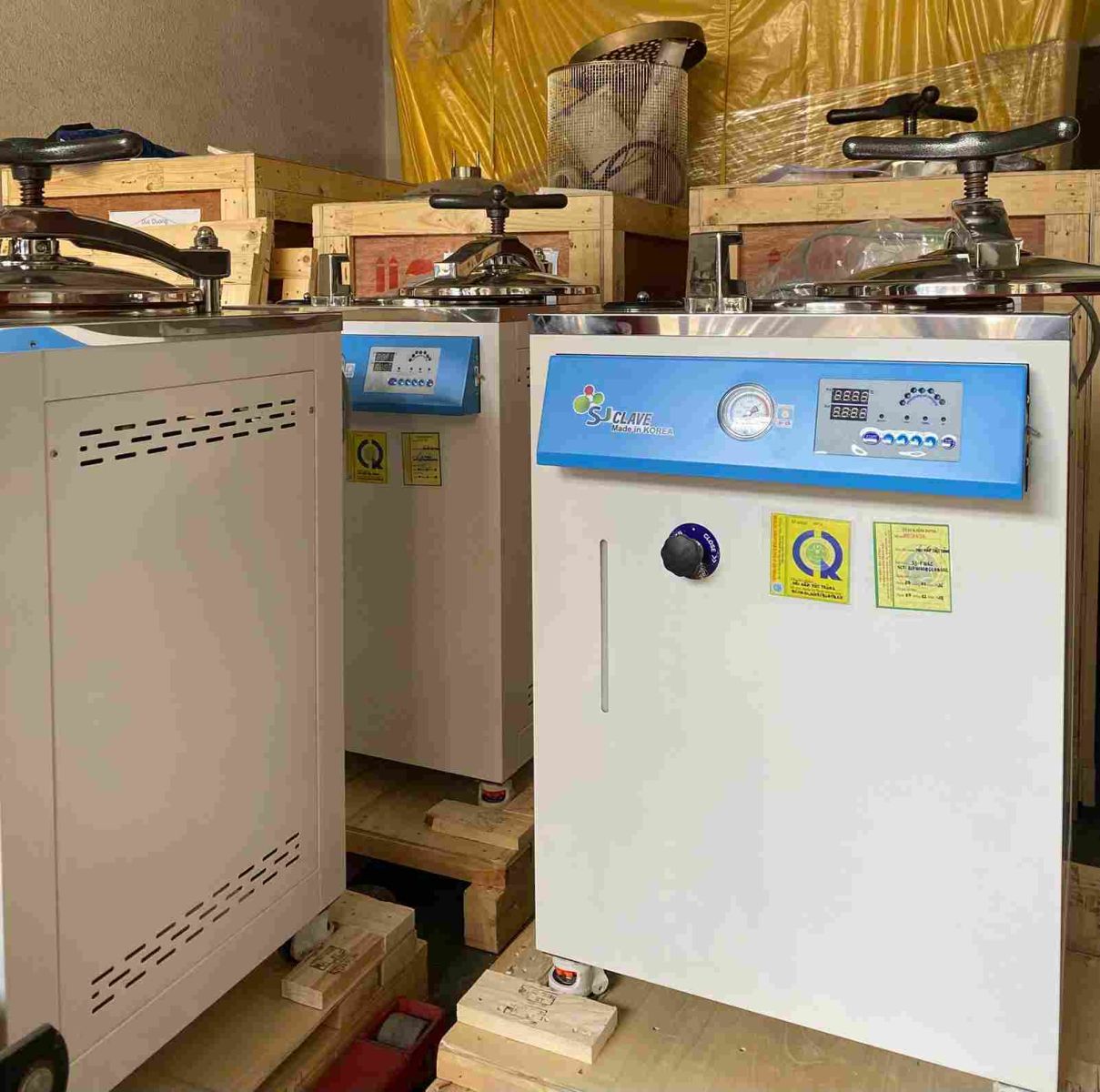
The development of modern technology helps reduce the burden of manual record-keeping and limit human errors. Models such as the 103-liter Self-Filling Autoclave, SJ-FW100, from Korea, integrate a very convenient thermal data printer.
According to the catalog, this device has a PID controller that helps control the autoclave’s operation with absolute precision. Combining this with a safe method of preventing water depletion during autoclave operation helps protect sensors and ensures stable logbook data. We can easily extract reports via USB port to store electronic records as required by ISO 17025.
6. Common Errors Causing Labs to Receive NC Assessments
6.1. Top 5 Common Errors in Technical Record Management
Below is a list of the most common “non-conformities” that auditors frequently detect. Early identification of these risks helps organizations proactively prevent and improve their management systems.
- Retroactive recording: Technicians accumulate data over several days before recording in the logbook.
- Contradictory data: Parameters on thermal printouts do not match the data recorded manually in the logbook.
- Missing approval signatures: Autoclave cycles lack confirmation from the lab manager.
- Using correction fluid: A serious violation of the principle of record authenticity.
- Faded or dirty records: Logbooks contaminated with chemicals or improperly stored, resulting in data loss.
Conclusion
Managing logbooks according to ISO 17025 is not just a matter of paperwork, but the key to building an honest data system. Investing in modern equipment like the SJ-FW100 series will help automate the storage process and reduce the workload for staff.
Let’s view logbooks as intellectual assets that optimize the unit’s operational efficiency. Discover standard-compliant autoclave models to upgrade your lab today!
DUC DUONG SCIENCE AND TECHNOLOGY COMPANY
Address: 1014/67 Tan Ky Tan Quy, Binh Hung Hoa Ward, Binh Tan District, Ho Chi Minh City
Tel: (028) 3762 8042 – 3762 8043 – 3750 8514 – 3750 8793
Fax: 028 37628043
Email: ducduong@ducduongco.com
Website: ducduongco.com
ZALO OA: DUC DUONG SCI
FAQ – Logbook Management Questions
1. What should I do if I lose a thermal printout from the autoclave?
You need to create an incident report, explain the objective reason, and use handwritten data confirmed by management as a replacement.
2. Does ISO 17025 require the use of numbered logbooks?
The standard does not require it, but numbering the pages helps prevent illegal tearing or replacement of records.
3. Can an electronic logbook be used instead of a manual one?
Absolutely, as long as the software meets security requirements and has a clear audit trail.