
Did you know that approximately one-third of global food is wasted each year due to errors in storage and transportation? In the complex world of multinational logistics, maintaining stable temperatures is no longer an option but a matter of survival for businesses. Manual control methods are no longer sufficient to handle the risks of cold chain disruption.
This article will decode why temperature recording equipment has become the “backbone” of the smooth operation of a modern supply chain. We will explore mandatory international standards as well as how to choose the most optimal monitoring technology. From there, you can establish a robust goods protection system, minimizing economic losses.
1. Legal Basis and Mandatory International Standards
1.1 The Role of Temperature Recording Devices in GSP and GDP
In the pharmaceutical industry, compliance with Circulars 02/2018/TT-BYT and 03/2018/TT-BYT of the Ministry of Health is a prerequisite for warehouse operations. Good Storage Practice (GSP) and Good Distribution Practice (GDP) standards require strict and continuous temperature monitoring. Only accurate historical data is sufficient to prove the safety of pharmaceuticals when facing post-audits.
The application of automated standardization solutions – a perfect quality protection solution – helps businesses completely eliminate errors caused by human factors. We need to understand that electronic data is the only legal evidence to protect the reputation of businesses before the law. This accuracy is not only compliance, but also a commitment to responsibility towards public health.
1.2 ISO 22000 and HACCP Standards in the Food Industry
The Hazard Analysis and Critical Control Points (HACCP) system identifies temperature as a key factor in preventing bacterial growth. For organizations implementing ISO 22000, demonstrating that goods are stored within the target temperature range is mandatory. A quality data logger will help you closely monitor “critical control points” (CCPs) throughout the supply chain.
With transparent data reports, businesses can easily obtain global food safety certifications. This is an important passport for Vietnamese goods to enter demanding markets such as the US or EU. Strict monitoring helps us affirm quality and enhance brand value on the international export map.
2. Financial Risks of Temperature Data Shortage
2.1 Economic Losses from Cold Chain Breakdowns
Consider the economic aspect: the investment cost for a self-recording temperature monitoring device is only a few tens of dollars, while the value of a shipment can reach billions of Vietnamese dong. According to IATA research, losses due to cold chain breaks in the global pharmaceutical industry amount to $35 billion annually. Without supporting data, insurance companies have the right to completely refuse compensation for damaged shipments.
| Criteria | Using self-recording devices | Manual recording |
| Accuracy | High, continuous 24/7 | Low, prone to errors/omissions |
| Insurance claims | Easy (with data evidence) | Difficult (lack of verifiable evidence) |
| Risk cost | Low | Very high |
Securely stored data in stable memory allows us to proactively handle incidents from the moment temperature fluctuations are detected. This helps prevent the need to discard entire shipments due to small, undetected temperature deviations.
2.2 Long-term impact on brand reputation
Substandard goods reaching consumers not only cause immediate damage but also destroy reputations built over decades. Especially in the pharmaceutical industry, vaccines losing their effectiveness due to high temperatures can lead to serious consequences for human lives. Data transparency is how you build absolute trust with strategic partners such as supermarkets or hospitals.
When we control temperature data, businesses gain an advantage in major contract negotiations. Professional risk management helps you completely differentiate yourself from competitors who lack proper methods. Investing in monitoring technology is investing in the most valuable intangible asset: customer trust.
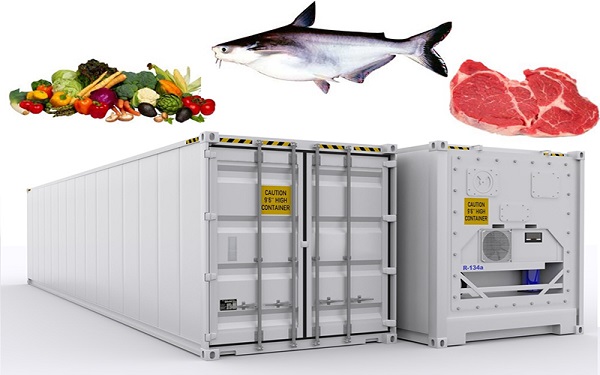
Transparent data from temperature recording devices helps enhance a company’s reputation
3. Classification of Common Temperature Recording Device Technologies
3.1 Single-Use Temperature Recording Devices
For long-haul export shipments, single-use temperature recording devices are the most economical and convenient solution. You don’t need to worry about retrieving the device after the goods have arrived in another country. Typical products like Sensitech’s TempTale® Ultra Fit are designed to be ultra-slim, allowing you to easily insert them into narrow packages without taking up much space.
This solution is particularly suitable for businesses exporting fresh fruit or frozen seafood to international markets. Implementing a monitoring program with single-use devices gives you more flexibility in the packaging process. At the same time, it ensures the independence and security of data for each individual shipment.
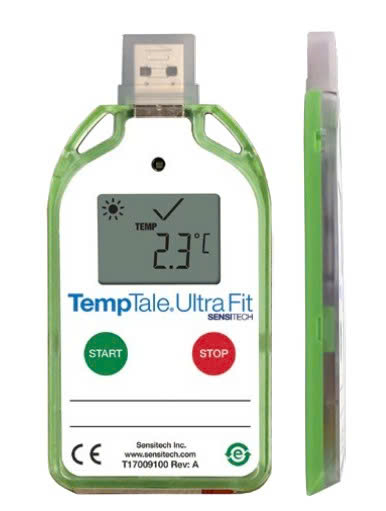
Sensitech TempTale UltraFit temperature data loggers will solve your business’s temperature data transmission problems
3.2 Real-time IoT and Multi-use Monitoring Systems
In internal warehouse management, multi-use temperature recording devices combined with IoT technology are becoming an inevitable trend. Instead of extracting data via USB, this system allows you to monitor the condition of goods in real time. Integrating them into the top modern laboratory equipment necessary for labs optimizes automated operational processes.
The IoT system will send instant alerts via email or phone if the temperature exceeds safe limits. This helps the QA/QC team react quickly to protect business assets. Although the initial investment cost is higher, the long-term benefits and sustainability it provides are entirely worthwhile.
4. Operating Instructions and Accurate Installation Location
4.1 Thermal Mapping and Important “Hot Spots”
You should not place the device near the container door or close to the evaporator, as the data obtained will not accurately reflect the actual temperature of the entire shipment. Thermal mapping technology helps us identify “hot spots”—areas where temperatures are usually highest due to poor air circulation. Typically, the ideal location is in the middle of the cargo and furthest from the evaporator in the vehicle.
Installing the device in the correct location ensures that even the smallest temperature variations are accurately recorded. This provides import/export personnel with reliable data when reporting on the condition of the goods. Careful installation helps eliminate unnecessary disputes between the supplier and the shipping company.
4.2 Setting Alarm Thresholds
Each type of goods has its own unique “safety threshold,” and incorrect settings can lead to false alarms, wasting resources. We need a deep understanding of product characteristics, for example, why is 121°C the standard in sterilization? This illustrates the strict temperature requirements in medicine. For pharmaceutical vaccines, the temperature range is typically fixed from +2°C to +8°C, while frozen foods require temperatures below -18°C.
Modern equipment allows you to set both single-event and cumulative alarms. This helps us assess the total time goods are subjected to “thermal shock” to make decisions about accepting or rejecting shipments at the port. Setting the correct thresholds makes the QA/QC process more objective and efficient than ever before.
5. A Breakthrough Solution from Sensitech: TempTale® Ultra Fit
Sensitech is a global leader in supply chain transparency solutions, trusted by the world’s largest pharmaceutical and food corporations. Among its offerings, the TempTale® Ultra Fit stands out as a powerful and easy-to-use disposable temperature data logger. With its ultra-slim design (only 7mm), it can easily fit into any package without taking up much space.
This product provides absolute peace of mind thanks to its wide measurement range from -30°C to +70°C and impressive accuracy of up to ±0.5°C. Notably, it automatically generates secure PDF reports upon plugging into a USB port, allowing you to quickly make decisions about accepting or rejecting goods at the receiving dock without needing to install complex software. You can also explore Sensitech’s traditional monitor range to find the best option for your needs.
Conclusion
We have clarified why possessing transparent temperature data is key to operating a sustainable cold chain supply. Data logging equipment is not just a simple monitoring tool, but a loyal “guardian” of your business’s economic value and reputation. Investing appropriately in this technology helps you eliminate financial risks and build strong trust with global customers.
Sensitech’s TempTale® Ultra Fit solution is your reliable partner, helping you digitize your quality management processes easily and effectively. Don’t let small temperature errors ruin your business’s significant efforts. Contact us today for advice on the most advanced technical solutions.
DUC DUONG SCIENCE AND TECHNOLOGY COMPANY
Address: 1014/67 Tan Ky Tan Quy, Binh Hung Hoa, Binh Tan, HCM
Tel: (028) 3762 8042 – 3762 8043 – 3750 8514 – 3750 8793
Email: ducduong@ducduongco.com
Website: ducduongco.com
ZALO OA: DUC DUONG SCI
FAQ
Should I use a disposable or reusable temperature recording device?
This depends on your business model. Disposable devices are ideal for export as they don’t need to be retrieved, while reusable (IoT) devices are optimal for internal storage and real-time monitoring.
How do I know if the device is still working properly?
Modern devices like the TempTale® Ultra Fit have LCD screens that display “Started” or “Running” status. You should also periodically check the calibration certificate (NIST Traceable) to ensure sensor accuracy.
How long is temperature data stored?
Most quality temperature data loggers can store data for up to hundreds of days with tens of thousands of data points. This allows you to retrieve information even for very old devices.
Is software needed to read reports from the device?
Many high-end models, such as Sensitech’s Ultra series, automatically export PDF/CSV files when connected via USB. This allows stakeholders to easily review data without installing any specialized software.
Which location in the container is the hottest?
The area near the container door usually has the highest temperature due to direct exposure to the outside environment and potentially leaky door seals. However, corners far from the cooling unit are also areas where airflow cannot reach and require careful monitoring.